What is happening
The Commission proposed renewing Germany’s country-specific permission under Article 19 of the Energy Taxation DirectiveThe EU directive governing taxation of energy products and electricity, including minimum rates and a route for authorising additional national exemptions or reductions.. This “derogation” is a time-limited Council authorisation for a national tax reduction for specific policy reasons. Germany requested the extension after its previous authorisation expired on 31 December 2025; the proposal itself does not grant the new permission.21
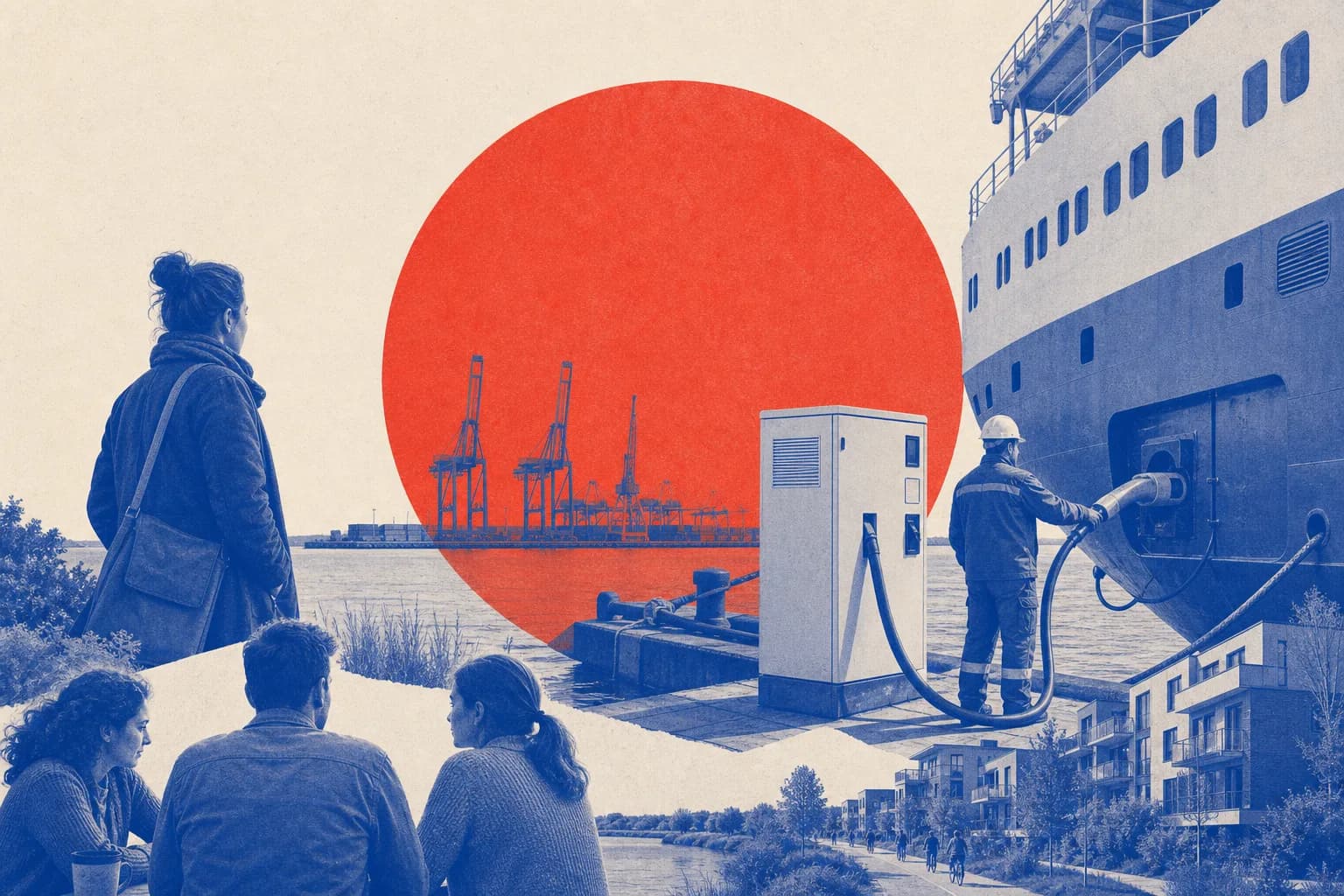
If the Council agrees, Germany could reduce its standard electricity tax of €20.50 for each megawatt-hour (MWh) supplied by €20, leaving a rate of €0.50/MWh, the EU minimum for business electricity. Germany could charge the lower rate at supply or issue a refund. It would cover commercial vessels, including fishing vessels, regardless of size or flag, but not private pleasure craft. Using shore-side electricityElectricity supplied directly from land to a vessel while it is berthed in a port, instead of being generated aboard.—power supplied from land while a vessel is berthed—would remain optional.2
German authorities reported that 28 companies claimed the relief in 2024, covering about 74,100 MWh and approximately €1.48 million in forgone tax revenue. Germany had more than 400 fixed or mobile shore-power facilities at sea and inland berths, while additional facilities were planned or under construction in 50 sea and inland ports.2
Why it matters
Electricity made aboard ships at maritime berths is tax-exempt under EU rules, as is the fuel burned to produce it; Germany also applies the optional exemption for onboard generation in inland navigation. The Commission says this treatment puts shore-side electricity at a competitive disadvantage and supports allowing Germany not to penalise what the Commission presents as the less-polluting option.2
Germany says the lower rate is intended to encourage operators to use shore power rather than generate electricity onboard, improving local air quality and reducing noise in port cities; Germany also expects lower carbon dioxide emissions. German authorities say take-up is limited by the absence of internationally agreed connection standards and, in some places, insufficient shore-side supply capacity. The Commission considers significant distortions between ports unlikely.2
What happens next
Under Article 19, the Council may authorise the measure only by unanimous agreement on the Commission’s proposal. If adopted as drafted, the permission would cover 1 January 2026 to 31 December 2029. It would end sooner if broader EU rules on tax advantages for shore-side electricity became applicable; the Commission’s proposed recast of the Energy Taxation Directive contains a general option for Member States to offer such advantages.2